Since December 2025, the Commission, the Council and the European Parliament have reached a provisional agreement paving the way for their use to strengthen the competitiveness, sustainability and sovereignty of the agricultural and food sectors.
Targeted modifications, comparable to nature
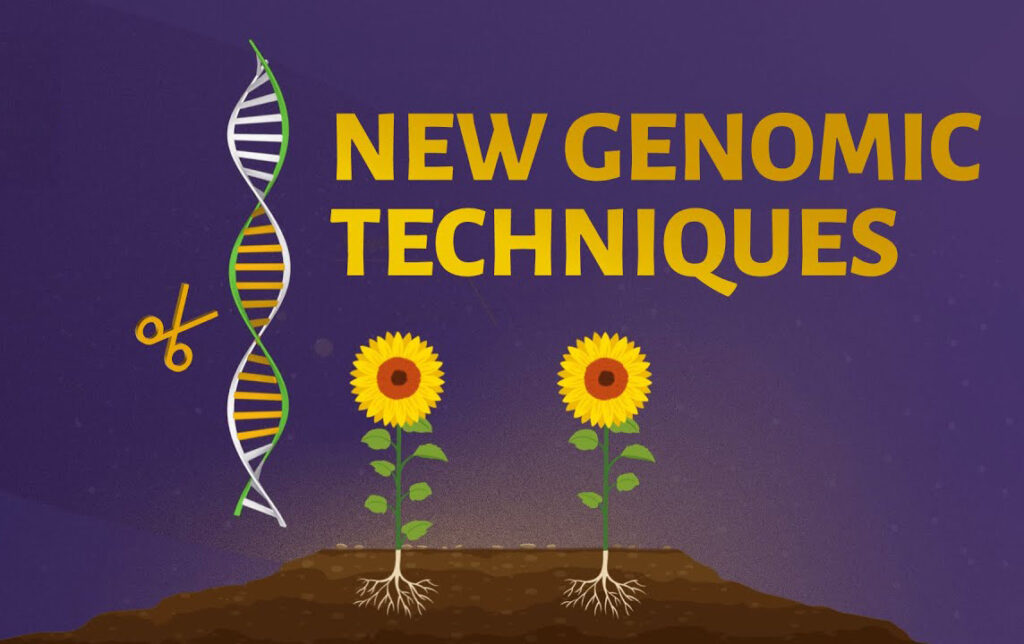
NGTs enable targeted genetic modifications comparable to mutations that can occur naturally, without introducing foreign genes.
Imagine correcting a few letters in a text: that is exactly what a molecular tool like CRISPR does to DNA. The result? A plant that directly expresses the desired trait from the first generation, with unprecedented precision.
Unlike traditional methods, which rely on successive crossbreeding or exposure to chemical agents to generate thousands of random mutations, NGTs precisely target the gene to be modified. This makes it possible to work on genes targeted for traits of interest (disease resistance, drought or heat tolerance, nutritional value, etc.) more quickly and accurately.
An asset in the fight against climate change
Faced with increasingly unpredictable weather conditions, growers need resilient, high-performing varieties. NGTs make it possible to create these plants more quickly, with unprecedented precision, and to respond effectively to challenges in the field.
They offer targeted solutions tailored to crop needs and will be a real asset in securing yields and optimising agricultural practices.


NGTs represent a major advance in plant breeding. These technologies, complementing existing tools, will strengthen our ability to offer solutions tailored to developments in the agricultural world, with greater precision and within timeframes compatible with the challenges on the ground.
Benoît Pétiard, Head of Research and Development at MAS Seeds
The Research & Development teams at MAS Seeds, Maïsadour’s seed division, have reorganized to fully integrate the identification of traits of interest, an essential step in exploiting the potential of NGTs.
Feasibility studies are currently being conducted with a potential partner. The aim is to accelerate the development of varieties incorporating these targeted traits, while maintaining yield and productivity potential.

